Case Study 03 · Fintech · Straight Through Processing
6 min read
Further Advance / Re‑advance
A customer who wants to draw more money against a home loan they already hold is asking their own bank a question it can already answer. That question used to take 5.2 days and a callback from a specialist.
Overview and Impact
Problem
Customers wanting a Further Advance or Re‑advance had one option: fill in a lead generation form and wait. A call centre agent would follow up within 48 hours, and the application then worked its way through a manual operational chain.
Outcome
The Problem & The Goal
The Challenge
The old journey wasn't broken so much as manual. A form generated a lead. A property specialist picked it up, called the customer back, and worked the application through a chain of operational steps: document collection, processing, handover to title deed attorneys, payout.
Every step was competent. The chain was just long, and the customer sat outside it with no visibility into where they were — and most of what they were being asked to supply, the bank already held.
Objectives
- Remove the specialist callback entirely — so the journey runs straight through from intent to payout.
- Preserve every legal and regulatory requirement — nothing captured on paper could be quietly dropped.
- Give customers visibility — real progress tracking rather than silence after submission.
- Change the technology underneath — so a customer the bank already knows is processed against the Know Your Customer data it already holds, rather than asked to prove themselves from scratch.
Discovery and Research
What I did
The first move wasn't Figma. It was time with the property specialists who worked these applications by hand — the only people who understood the full picture.
I mapped all of it in swim lanes, front-end and back-end, before defining the scope of the digital journey: what happened after a lead form was submitted, which documents were needed, which systems were involved, and where the handover to title deed attorneys happened.
Document audit
I pulled the actual documents used in the physical and phone applications and rationalised the fields — what genuinely had to be asked, what was asked twice, and what the bank already held.
Every input that survived maps back to a field in a legal or operational document. That is how we met the regulatory requirement without over-asking, and what made pre-population possible.
Definition and Ideation
The new end-to-end flow
I worked closely with a process engineer on one question: what is the fastest outcome we can give a customer who already banks with us?
The answer was to stop treating them as an unknown applicant. Identity, the account, the existing loan — the bank held all of it. So the journey pre-populates those fields and the customer confirms rather than supplies.
That reshaped the flow: pre-validation against existing data, automated eligibility checks, and direct payout, with no point at which a property specialist has to pick up the phone.
Repurposing what existed
I mapped drop-off communication opportunities using SMS and email templates the bank already had, optimising them for the new digital funnel rather than building new comms infrastructure.
Pre-approved assets that needed repositioning — saving both build time and a round of stakeholder negotiation.
Design & Compliance Iteration
A mature design system, pushed past its edges
The bank's Digital Sales Platform design system was the starting point, not the finish line. The question was never whether the components existed; it was how to assemble them so an existing customer never has to stop and think about what they are doing or why they are being asked.
Simplifying that far ran into the limits of what the platform could serve. Straight Through Processing means a decision returned while the customer is still on screen, and the services behind the journey weren't built for that. Getting there meant moving from Blaze to PowerCurve — a technology shift that came out of a design requirement, not the other way round.
Legal, Risk and Compliance, in the loop throughout
A self-service journey that can end in a significant home loan payout does not get signed off at the end. Legal, Risk and Compliance were in the room from the start, reviewing status messages, error states and confirmation screens as they were designed.
Keeping them in the loop the whole way is what got this over the line.
MVP01 went live first. What its data showed is shaping MVP02, currently in build, rather than trying to get the whole journey right in a single pass.
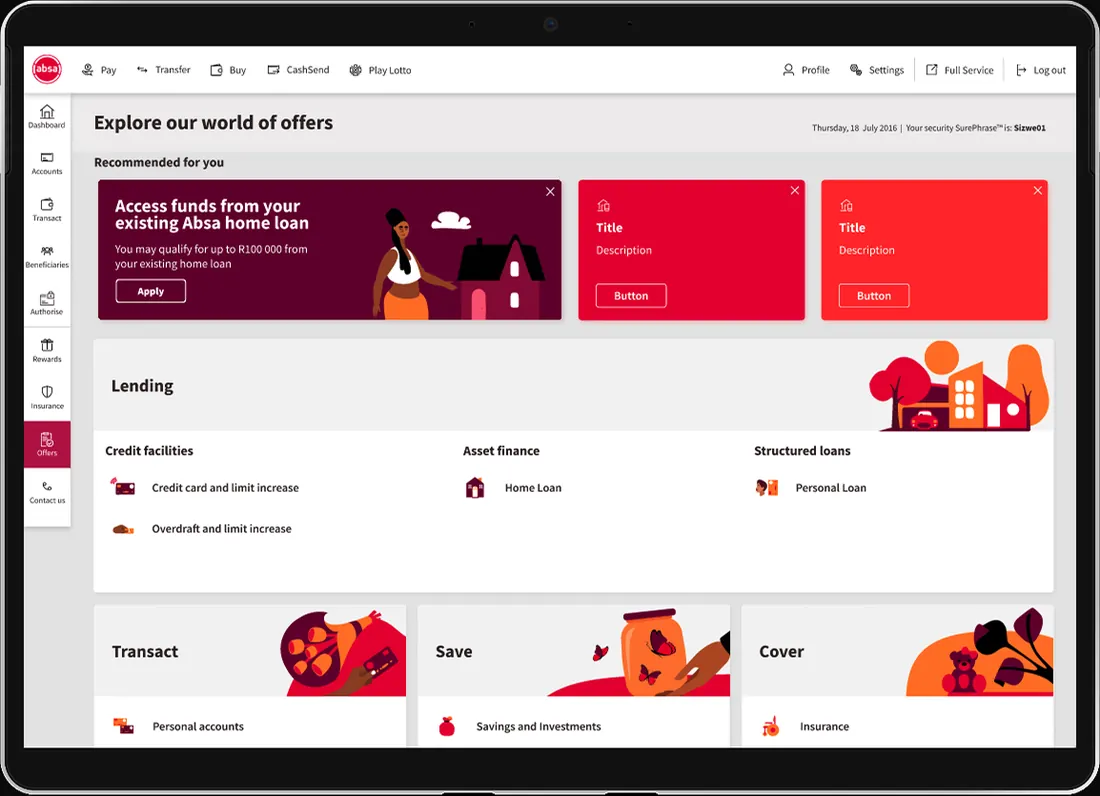
01 — OffersAn offers banner in online banking, inviting the customer to apply.
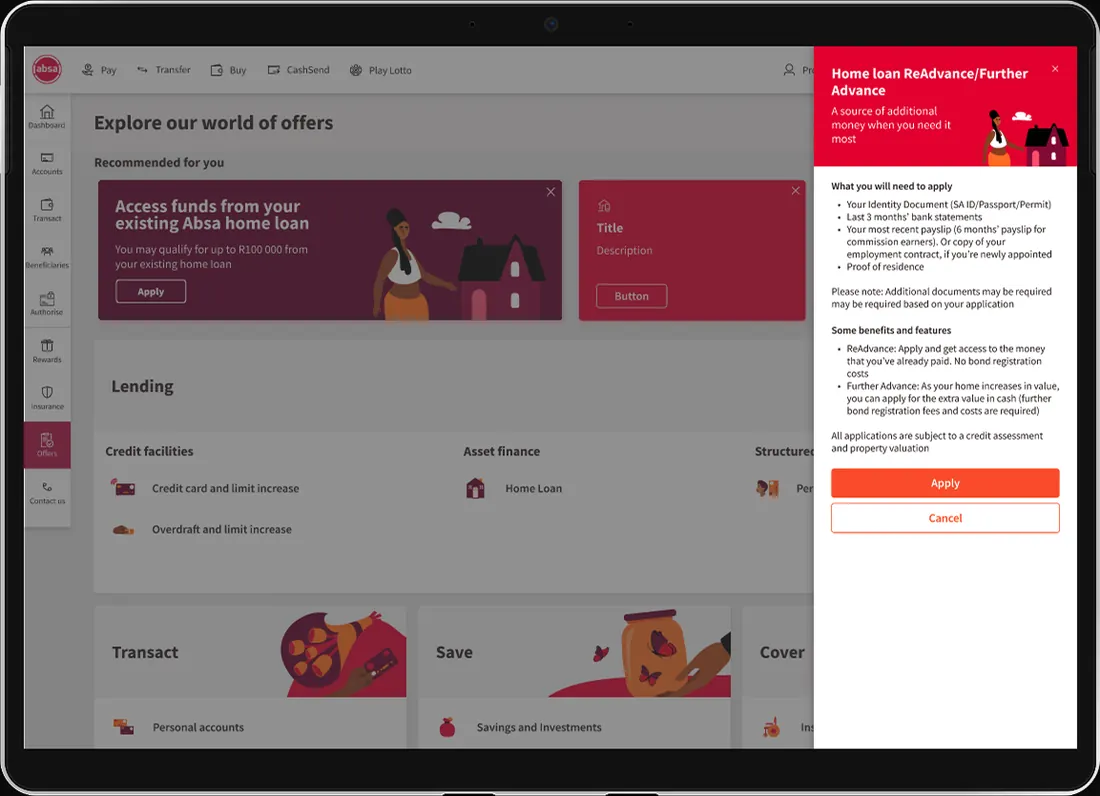
02 — Side PanelWhat you will need, and which product is which.
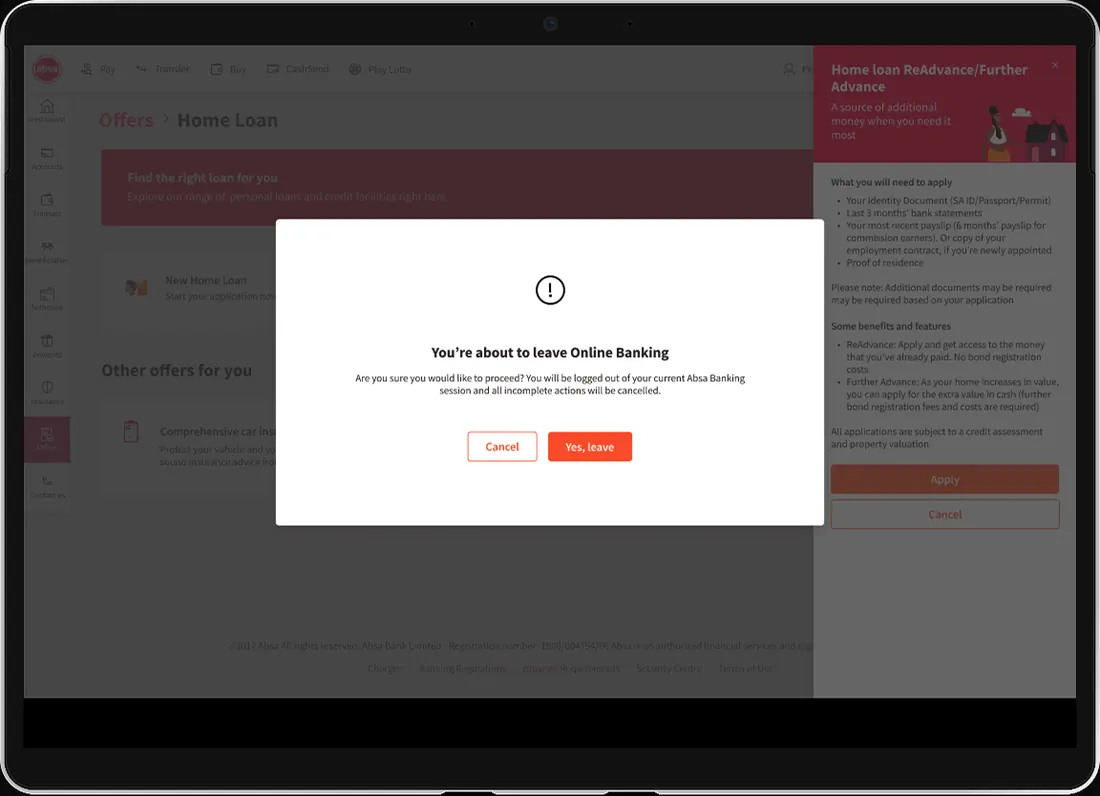
03 — Leaving Online BankingThe handover out of online banking, made explicit.
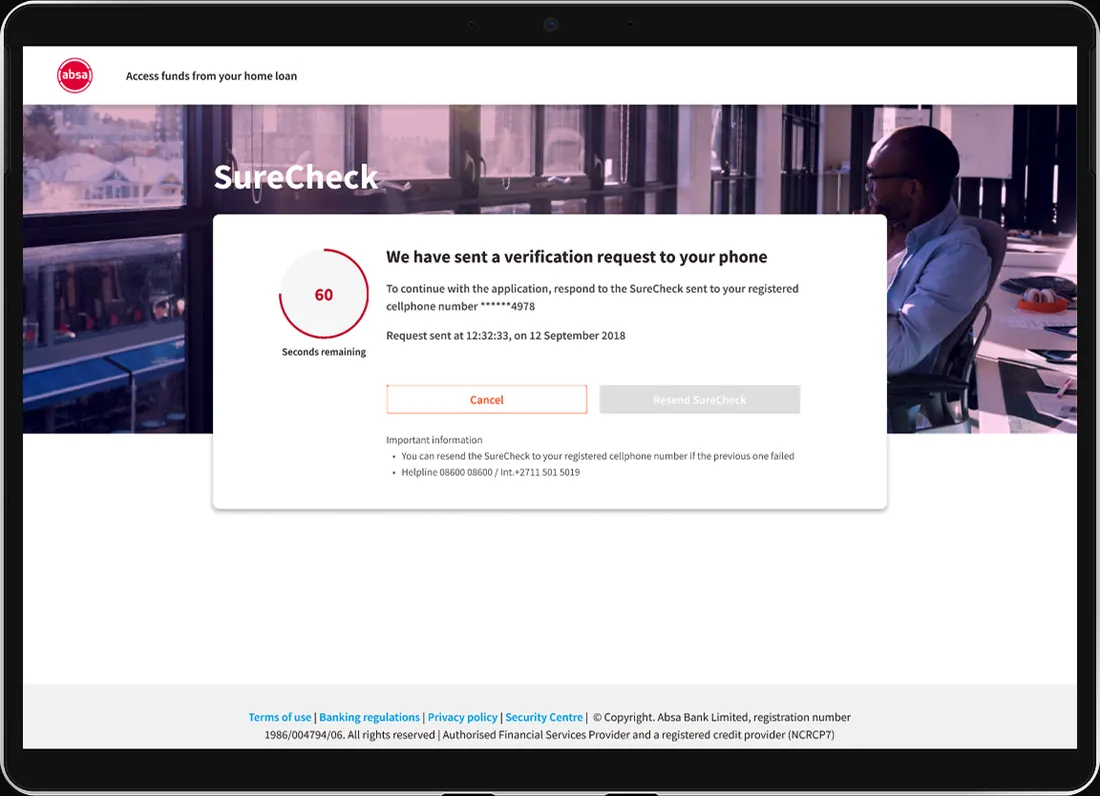
04 — SureCheckCarries the authenticated state across to the Digital Sales Platform.
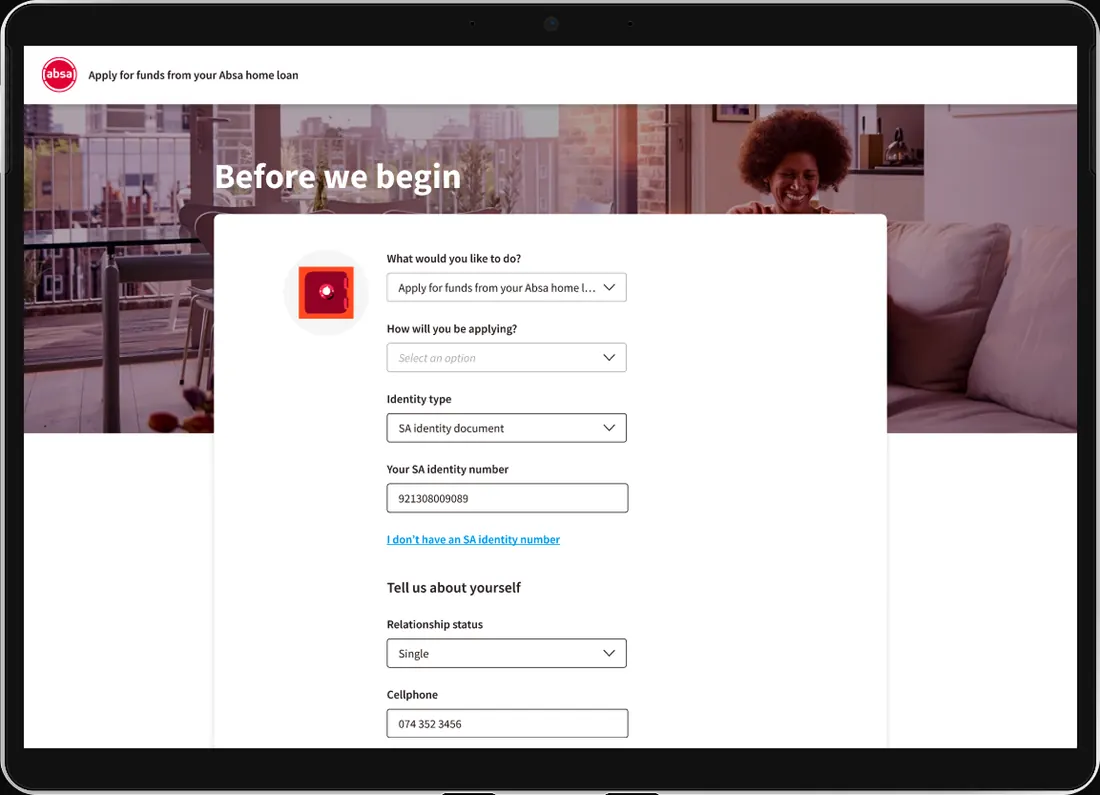
05 — Before We BeginThe Digital Sales Platform landing page, pre-populated with customer details.
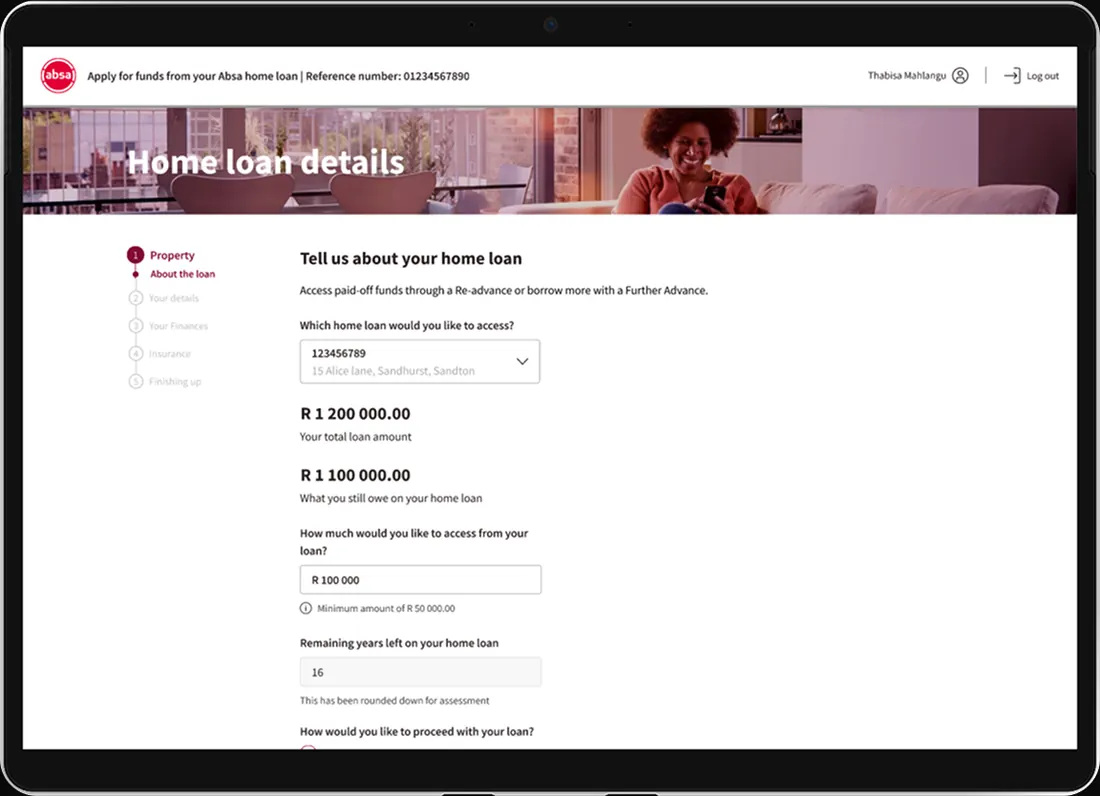
06 — Home Loan DetailsThe customer's home loans, so they can choose which one to draw against.
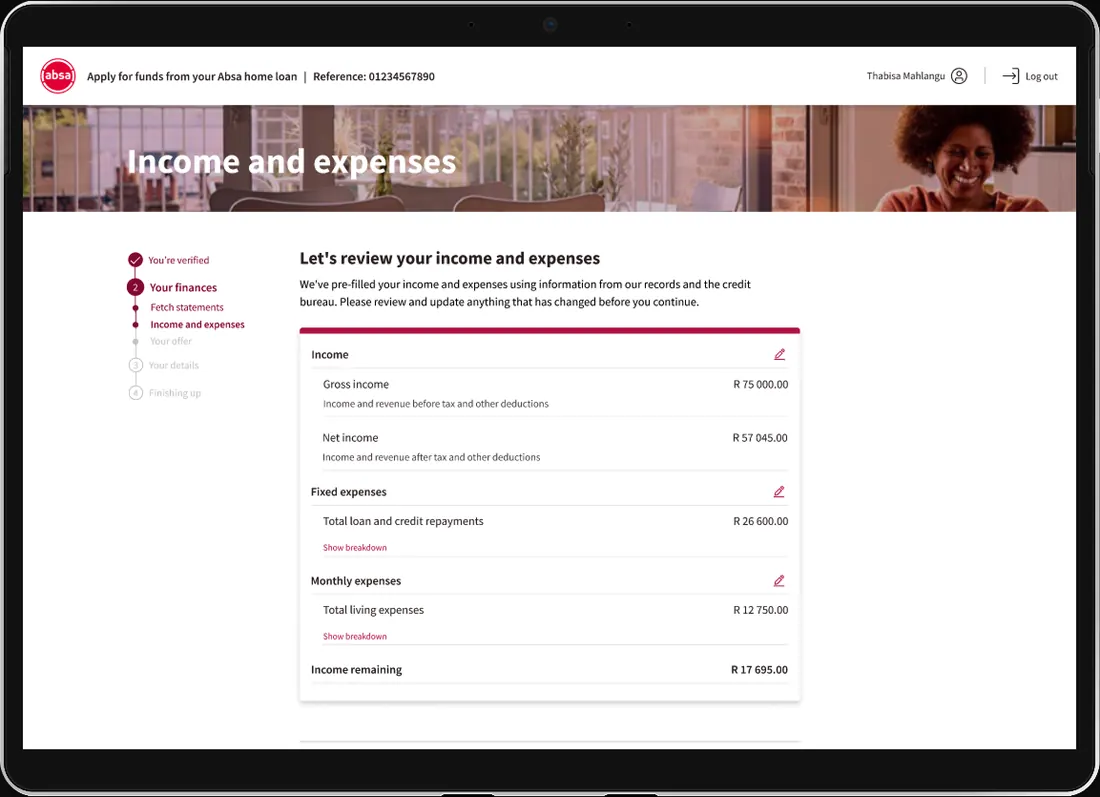
07 — Income and ExpensesPulled from golden sources, for the customer to validate.
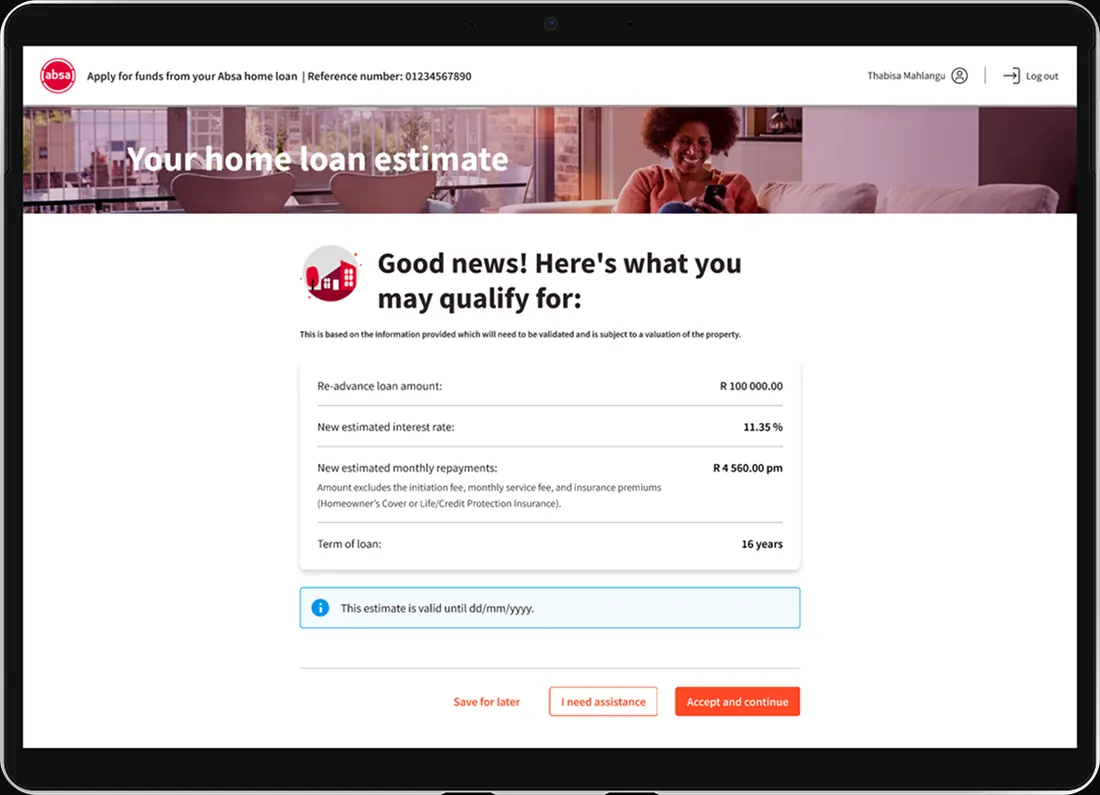
08 — The EstimateA conditional offer, presented in the session.
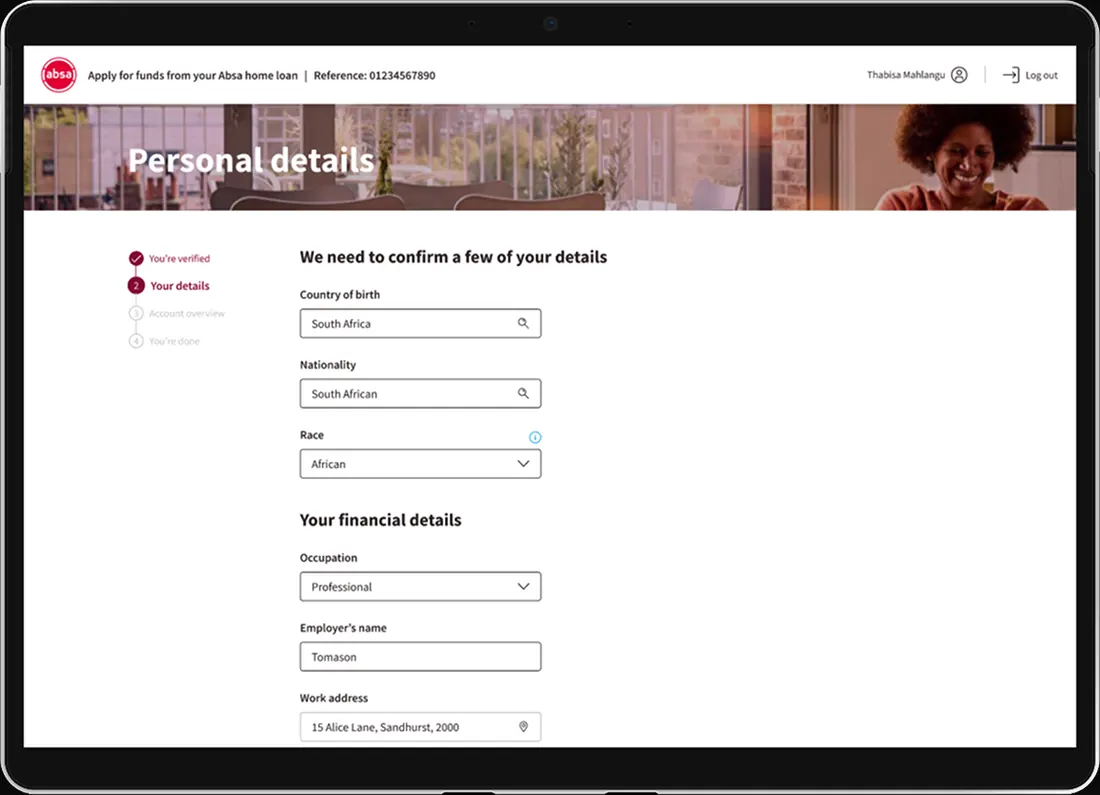
09 — Personal DetailsPre-populated, like every screen, with what the bank already holds.
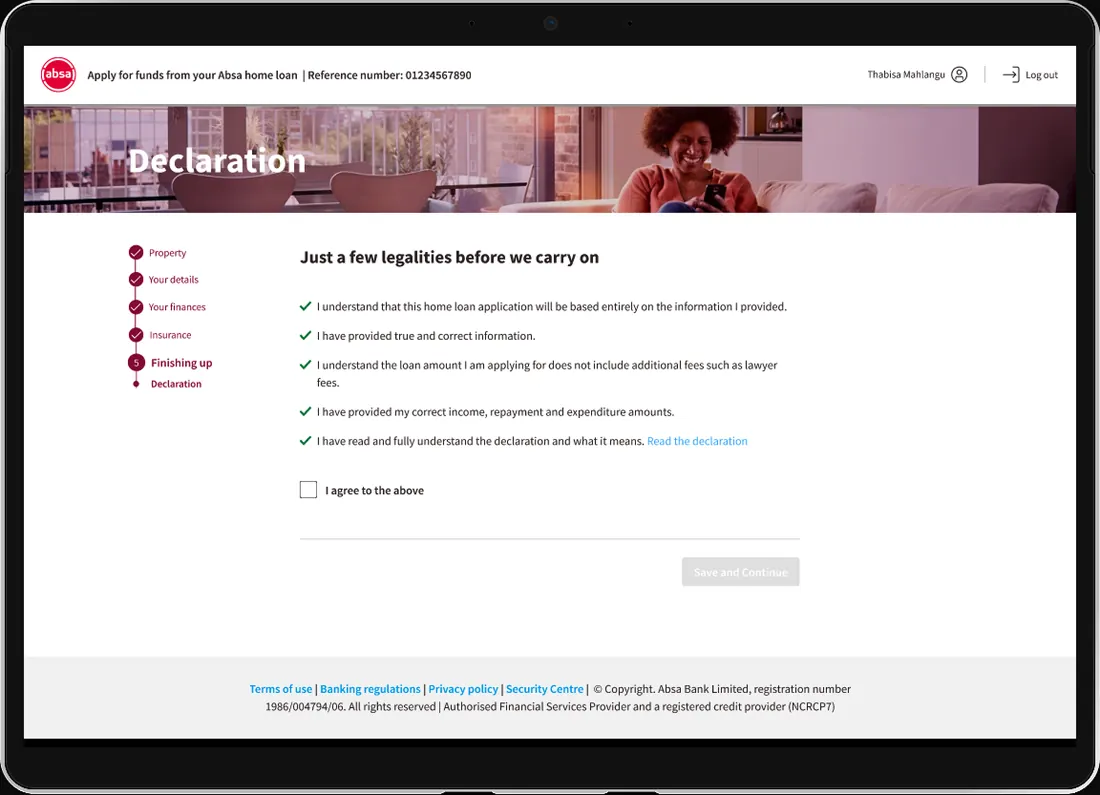
10 — DeclarationThe customer attests that all information is true and correct.
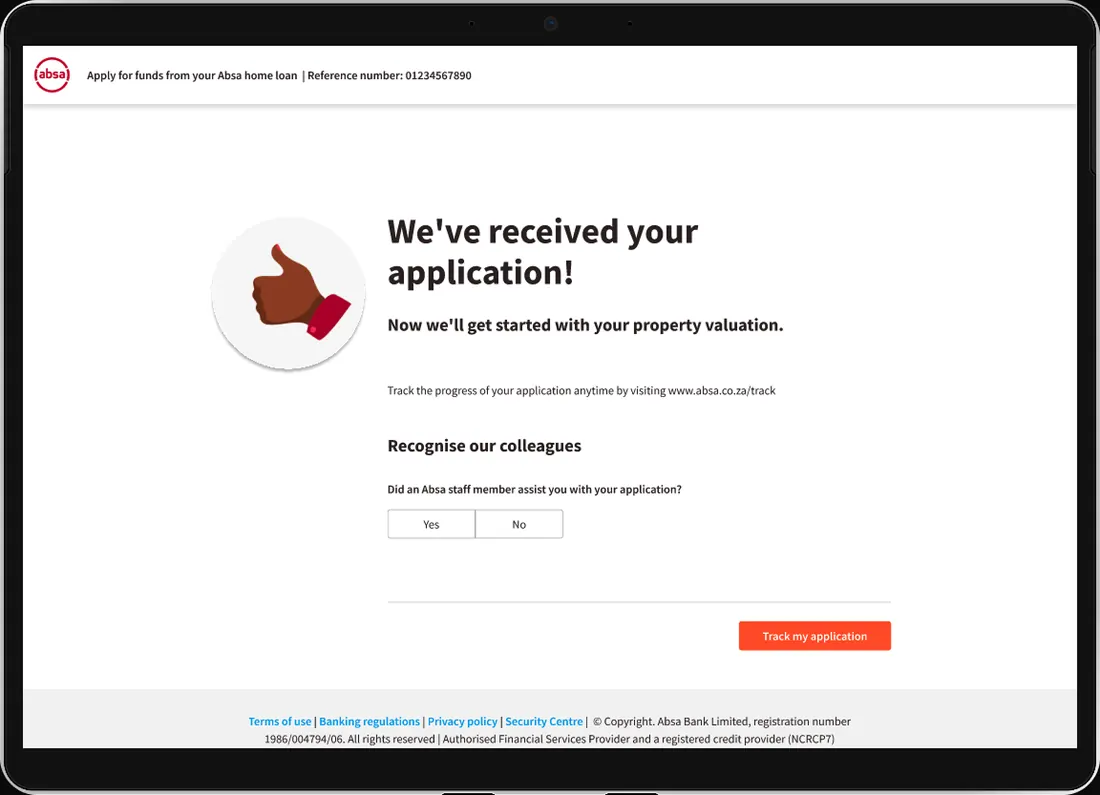
11 — SubmittedThe completion screen, with the valuation named as the next step.
↔ Drag to move through the flow · 11 screens
Before, and After
What it replaced
A lead generation form. A 48-hour wait for a callback. A specialist working the application through a manual operational chain. A customer with no visibility into any of it.
What shipped
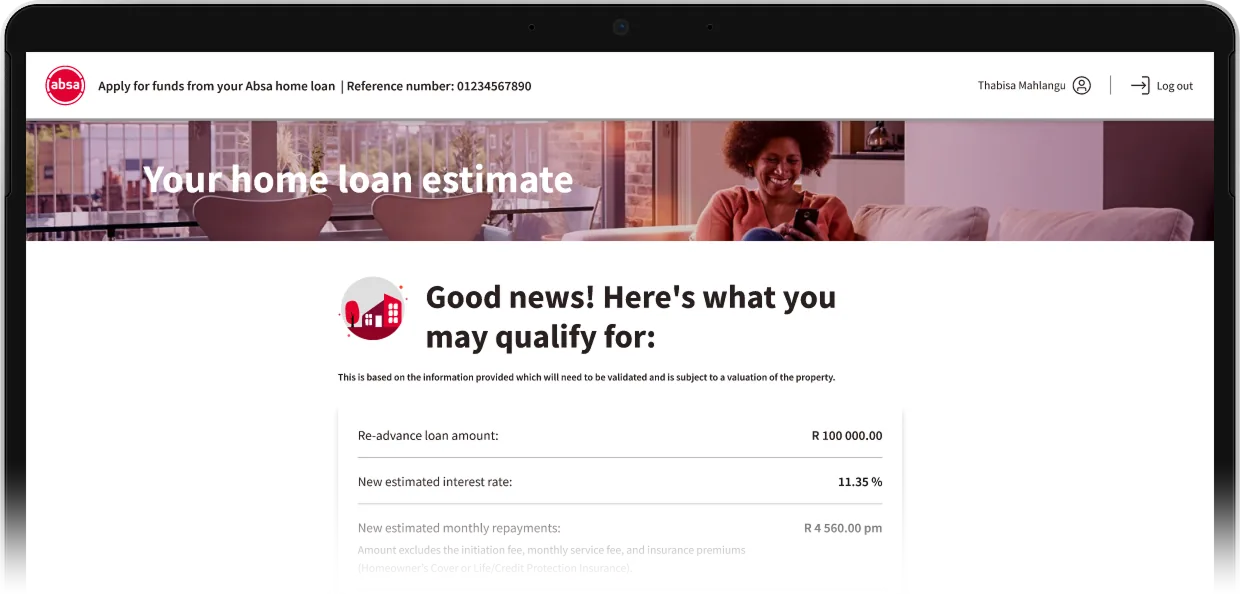
Straight Through Processing. The journey runs on what the bank already knows about the customer rather than asking them to establish it again — so the ask on screen is smaller, the decision is automated, and the outcome comes back in minutes rather than days.
Impact and Lessons
Results
The journey is live. The property specialist callback is gone from it entirely, and a customer who used to wait days for a phone call now gets a decision while they are still on the screen.
Lessons
Ask the customers you already know for less. Everything you ask an existing customer to supply again is a question you already have the answer to. Rationalising the fields down to what was genuinely new was the single biggest lever on this journey.
A mature design system is a floor, not a ceiling. Getting the experience where it needed to be meant pushing past what the platform underneath could serve, and moving the stack from Blaze to PowerCurve to match. That was a design change and an engineering change at once, and the design is what made the case.